Cook simple meals with local ingredients at altitude
A low-fuss approach to market produce, one-pot cooking and shared tables when the kitchen is small and the day is full.
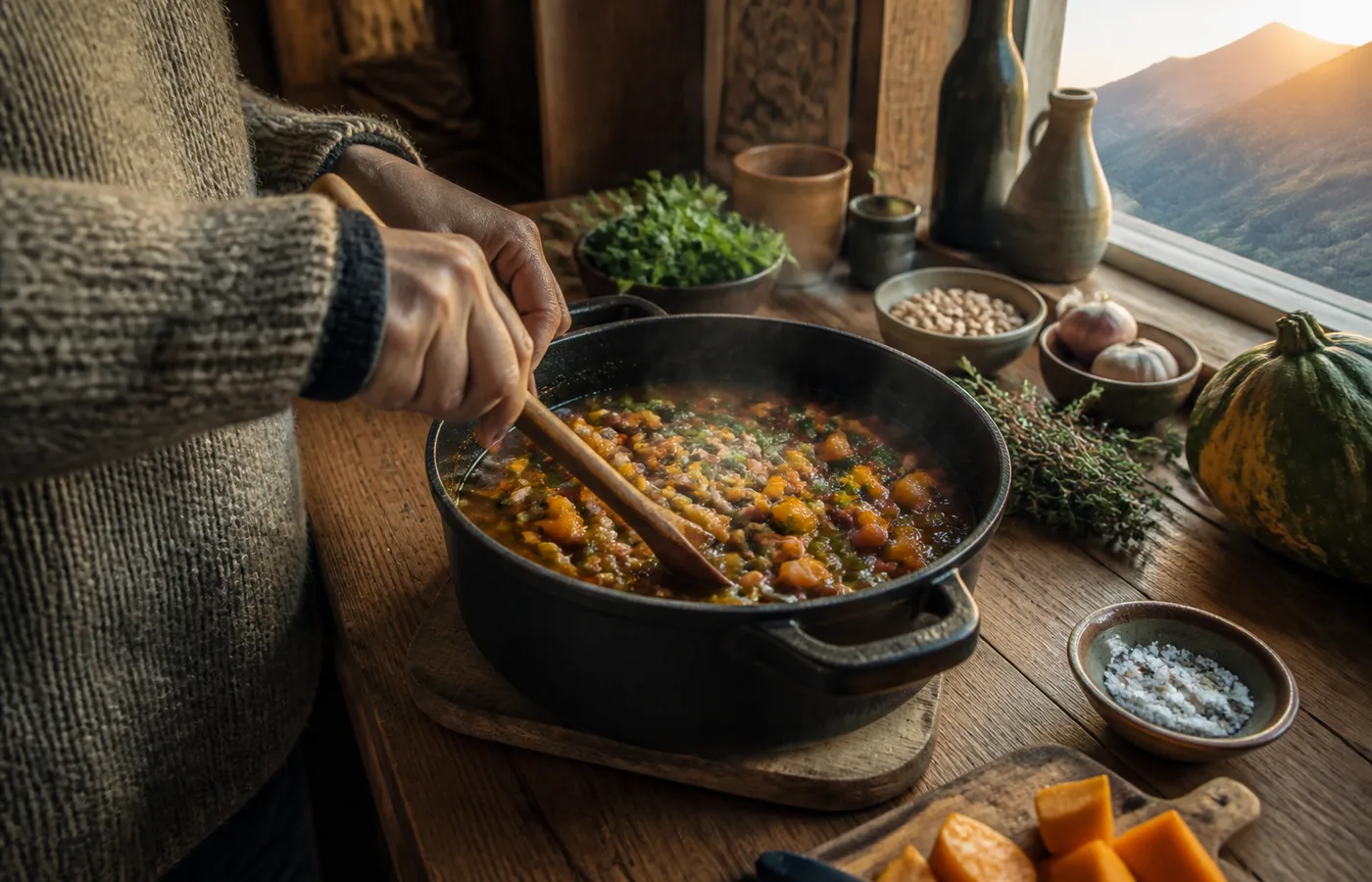
Cooking simple meals with local ingredients at altitude works best when the menu respects the kitchen, the day and the conditions. A cabin meal does not need to perform as a restaurant dish. It needs to be nourishing, adaptable and easy to finish with the tools available. Choose one sturdy base, one seasonal vegetable, a source of protein and a bright finishing element. Then use a method that tolerates timing changes. This structure leaves room for a farmers’ market find without making dinner depend on a perfect recipe.
Read the kitchen before planning the menu
Confirm the heat source, cookware, refrigerator space and basic utensils before shopping. Photographs may show equipment that is decorative, unavailable or different in size from what you expect. A single lidded pot, a good knife, a board and a spoon are enough for many meals. If a specialised tool is essential, bring it or change the dish.
Check pantry assumptions too. Salt, oil, coffee, foil and spices are not universal cabin provisions. Build a tiny pantry kit with the few things you use often, clearly sealed and labelled for yourself. Avoid carrying a full kitchen. The aim is to protect the meal from one missing basic while still allowing the local ingredients to lead.
Shop for roles instead of a fixed recipe
At a local shop or market, look for ingredients that can fill four roles. A grain, pasta, potato or bread provides the base. Beans, eggs, cheese or another suitable option add substance. In some valleys that substance is cured rather than cooked, and a regional counter such as a Salumeria di Verona e del Veneto will do more for a cabin dinner than anything carried from home. One or two vegetables bring season and texture. Herbs, citrus, vinegar or a condiment create a bright finish. The roles remain stable even when the exact produce changes.
Ask simple questions about unfamiliar ingredients and avoid buying more than the group can use. Remote stays make leftovers harder to store or transport. Choose vegetables that can appear in breakfast or lunch as well as dinner, and keep one shelf-stable meal in reserve. A flexible plan reduces waste without turning every ingredient into a calculation.
A coastal kitchen rewards a cook who reads the water before the recipe. The Bogue Sound and the wider Crystal Coast sit behind a narrow barrier island, so the catch, the season and the weather all shift together. A local magazine keeps a dated record of that water, its tides, its channels and the bridge that crosses it, alongside notes on what reaches the table and when. Reading such a record before a trip helps a cook plan around what is actually available instead of what a fixed list assumes.
Choose a method that welcomes variation
Soups, braises, warm grain bowls, pasta and tray meals are forgiving because texture can be checked as the food cooks. At higher elevations, boiling and cooking behaviour may differ from what you know at home, and unfamiliar equipment adds another variable. Use appearance, aroma and texture rather than relying only on a familiar time. Add liquid gradually and taste before making a large adjustment.
Begin with the ingredient that needs the longest cooking, then add delicate vegetables and herbs later. Keep one component fresh or crisp for contrast. This sequence lets a simple dish feel complete without producing several pans. It also makes serving easier when people return from outside at slightly different times.
Make the first meal deliberately easy
Arrival night is not the moment to test the most ambitious plan. Bring a meal that can survive delay, limited light and a kitchen you have not yet learned. Soup with bread, a pasta with vegetables or a warm bean dish can be ready without unpacking every bag. Save the market-led meal for the next evening, when you understand the stove and know how the room holds heat.
A tired arrival is not the moment for a long braise. Boil water, salt it well, and cook dried pasta or a handful of small potatoes from the market. While they cook, warm olive oil in the same pot with garlic, then fold in a jar of tomatoes, a pinch of dried oregano, and a spoon of honey if the sauce tastes sharp. Altitude slows boiling, so give it a few extra minutes and taste before draining. Bread, cheese, and a sliced apple finish the plate. If the cupboard is bare and a housewarming is coming, housewarming food gifts can cover the first night.
Set the table before hunger becomes urgent. Put water, bowls, serving spoon and a cloth within reach. In a small cabin, this reduces movement around the cook and makes the room feel calmer. The meal begins with the way people can gather, not with the moment food reaches a plate.
Close the kitchen well
Cool and store food promptly according to the facilities available, clean surfaces and follow the property’s waste instructions. In rural areas, food smells and unsecured rubbish can create problems beyond ordinary untidiness. Do not improvise outdoor storage. Use the containers and procedures provided by the host or relevant local guidance.
Before departure, make one final meal from the remaining ingredients and pack only what can travel safely. Leave no anonymous jars or open packets for the next guest. A simple cabin kitchen feels generous when it is returned clear, dry and ready, with no mystery left in the refrigerator.
The memorable part of a mountain meal is often its fit with the day: enough warmth after a walk, enough freshness to taste the season and little enough fuss that everyone remains at the table.