Pack lightly for a remote cabin retreat in any season
A packing system for remote stays that protects warmth, food and attention without turning a small cabin into storage.
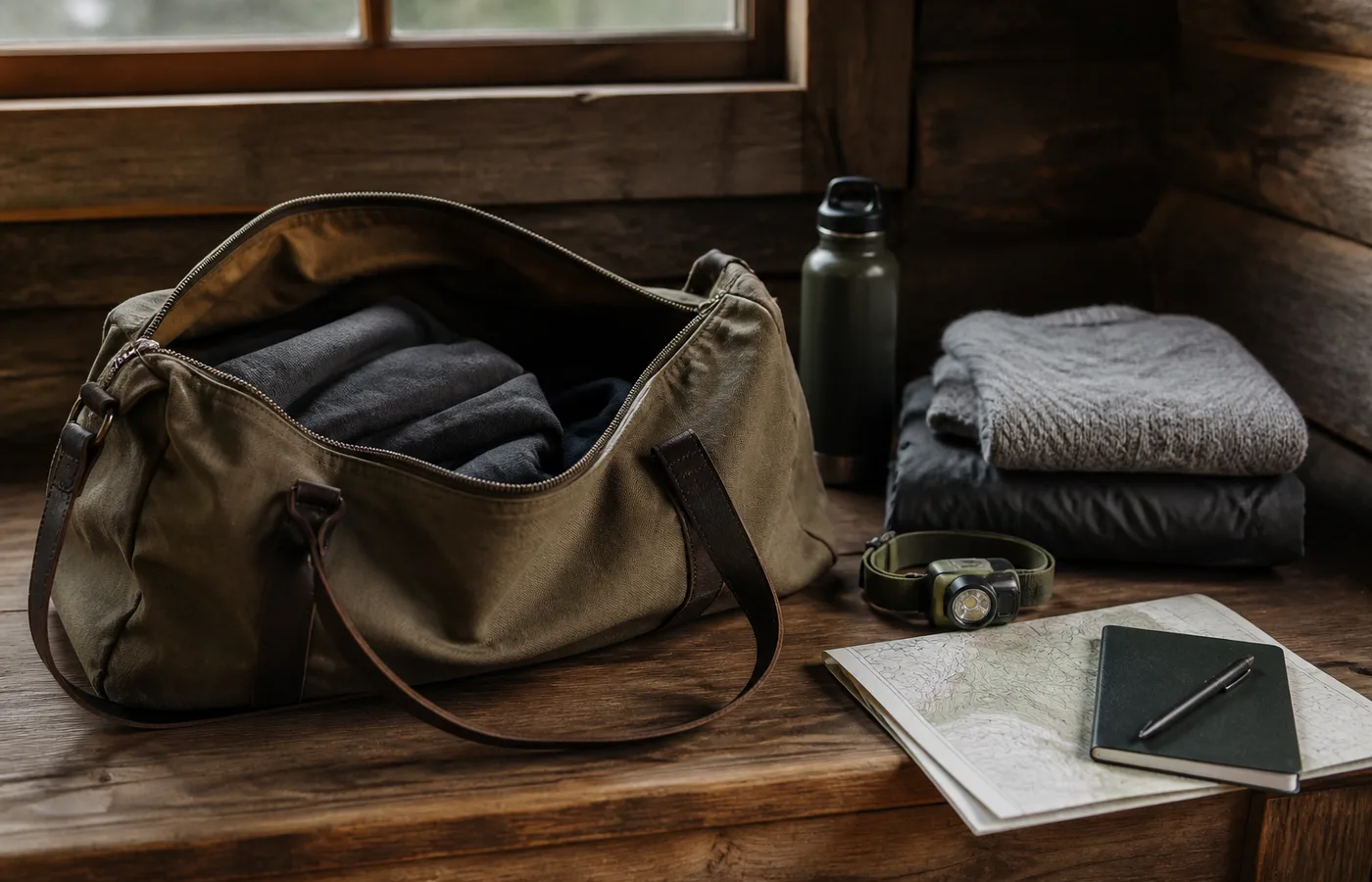
Packing lightly for a remote cabin retreat is an exercise in systems, not sacrifice. The aim is to cover the conditions that would interrupt the stay while avoiding bags that occupy every bench and doorway. Start with the cabin information, forecast, access and planned activities, then build around five functions: warmth, food, light, movement and rest. An item earns its place when it solves a likely problem, works with other items or makes the weekend meaningfully better. Everything else competes for space and attention.
Pack for conditions rather than a season name
Spring, summer, autumn and winter are broad labels. A more useful packing brief combines daytime temperature, overnight low, precipitation, wind, ground conditions and the time you expect to spend outside. Check the forecast close to departure and compare it with the property’s guidance. Mountain weather can make a warm afternoon and a cold evening part of the same day, so a flexible clothing system matters more than a single heavy outfit.
Choose a base layer that feels comfortable indoors, an insulating middle layer and an outer layer that handles wind or rain. Add a dry change for the cabin and keep sleepwear separate from trail clothing. The pieces should fit together without restricting movement. Two coordinated outfits usually offer more useful combinations than five unrelated ones, and they are easier to dry, find and repack.
Build one compact kit for each essential function
Warmth includes clothing, but also dry socks, a hat and whatever the property expects guests to use for heating. Food begins with one dependable first meal, breakfast and a small reserve that needs little preparation. Light means a headlamp or torch for each person, plus spare power stored where it can be found in the dark. Movement covers footwear, a day bag, water and the navigation method appropriate to the outing.
Keep each function together in a pouch or packing cube. This prevents the first hour from becoming a full unpack. A clearly grouped light kit can be placed by the door; a food bag can move directly to the kitchen. When two people share the stay, divide critical items rather than putting every warm layer or light in one bag. The system remains usable even if one piece of luggage is delayed or left in the car. A travelling dog adds a sixth kit of its own: food, a towel, a lead that works on frozen ground and, for an animal that finds long drives difficult, the calming aids discussed on French resources such as CBD pour chien.
Use the cabin inventory instead of duplicating it
Read the amenity list critically and ask about anything that changes the packing volume. Linens, towels, cooking oil, coffee equipment, firewood and basic cleaning supplies are often described differently from one property to another. Do not assume that a photograph proves an object is available. A brief question can remove several bulky items from the bag or prevent an inconvenient omission.
At the same time, avoid packing for an idealised version of the cabin. A complex recipe may require tools the kitchen does not have, and specialised entertainment can remain untouched when the weather is good. Bring versatile food, one shared game or book, and a charging plan. The point of a remote stay is not to recreate every option from home.
Protect the things that must remain dry and usable
Use simple internal waterproofing even if the main bag is weather resistant. A dry bag or sturdy liner can protect sleepwear, medication, paper directions and a small electronics pouch. Wet footwear and outerwear need their own return bag. This separation is particularly valuable in a compact room, where one damp item can quickly make the whole packing system feel untidy.
Keep the arrival essentials at the top: key instructions, light, outer layer and the address or route note. Items used only after settling in can sit lower. If the final approach involves carrying bags, test the weight before departure. Walk a short distance, climb stairs and adjust straps. A bag that is technically carryable in a hallway may feel very different on a rough path.
Leave room for comfort and for the return
Light packing should not remove every pleasure. Choose one deliberate comfort item, such as a good book, slippers, a sketchbook or a familiar tea. Because it is selected rather than added automatically, it carries more value. The rest of the space remains available for local food, a damp layer or the small objects that inevitably move during a stay.
Before leaving the cabin, repack by function and compare the result with the original list. Check drying areas, sockets, bedside spaces and the car rather than relying on memory. Note which objects were used and which never left the bag. That record makes the next retreat lighter for a reason, not simply because you decided to bring less.
A good remote-cabin bag is quiet in use. It opens without spilling into the room, reveals the next needed item and closes with enough spare space for the weather and the journey home.