Notice how autumn colour arrives at different elevations
A gentle field method for comparing leaf colour, frost and trail texture as autumn moves through a mountain landscape.
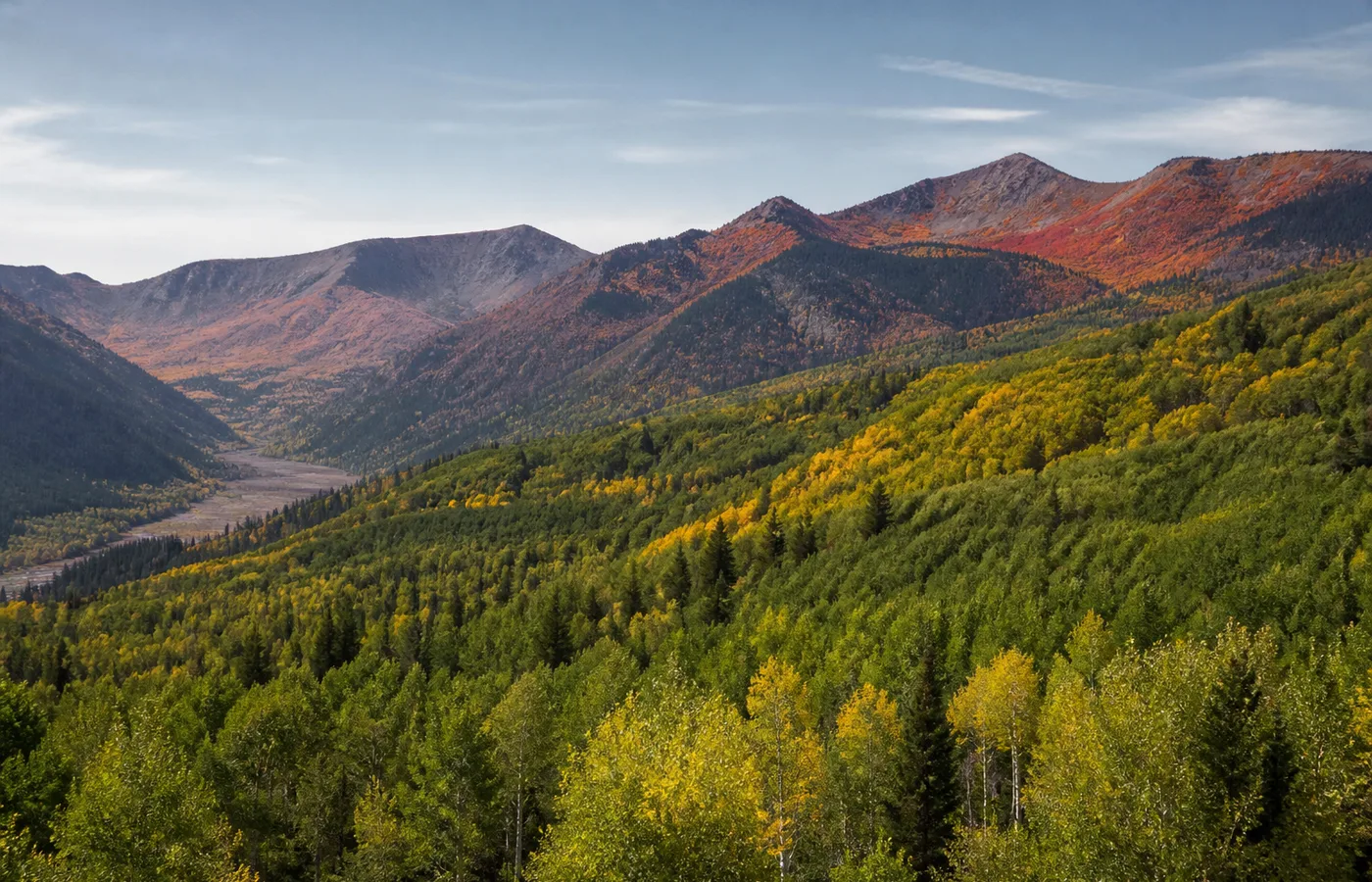
Noticing how autumn colour arrives at different elevations is a practical way to understand a mountain landscape without reducing the season to a peak-weekend prediction. Choose two or three viewpoints at different heights, record the date and recent weather, and compare the same broad signals: canopy colour, fallen leaves, understory, frost and visibility. The purpose is not to forecast an exact peak. It is to see how terrain, exposure and local conditions create several autumns within one valley.
Choose repeatable viewpoints
Select places that can be reached safely and viewed without leaving established routes. A lower trailhead, a mid-slope clearing and a higher overlook can form a useful sequence. Photograph from roughly the same position and direction on each visit. Consistency matters more than an impressive composition because it allows the landscape, rather than the camera angle, to provide the difference.
Record elevation only if you already have a reliable source, and avoid false precision. The relative positions, lower, middle and higher, are often enough for a personal field note. Add aspect when it is obvious, such as a slope that faces morning sun. These basic descriptors make comparisons possible without turning a walk into a technical survey.
Separate colour from leaf stage
A slope can look colourful because a few bright trees stand against a mostly green canopy. Estimate the broader stage as mostly green, mixed, mostly changed or largely bare, then note one or two dominant colours. This keeps a vivid patch from representing the entire hillside. Look at the understory separately, since shrubs and smaller trees may change on a different schedule. French colourists have a precise word for tone that arrives swept and uneven across a surface rather than all at once, balayage, and borrowing it is a useful reminder that a slope is rarely one shade at one moment.
Fallen leaves add another layer. Notice whether they are scattered, forming a continuous cover or collecting only in sheltered places. Their moisture and condition affect trail texture as well as appearance. A dry, newly fallen leaf and a dark, compressed layer tell different stories about recent weather and time.
Account for aspect, exposure and weather
Elevation is only one influence. Sun exposure, wind, cold-air drainage, soil moisture and tree species can make neighbouring slopes look unrelated. Use language that preserves that complexity. Write that colour appeared earlier on an exposed upper ridge, for example, rather than claiming elevation alone caused it. A field note is strongest when it distinguishes the visible pattern from the possible explanation.
Recent storms can remove leaves rapidly, while haze or wet surfaces can change how colour appears from a distance. Record cloud and precipitation before comparing photographs. If the light is very different, use the images as documentation rather than as a precise colour test. The written stage notes may be more reliable than the apparent saturation.
Build a useful seasonal sequence
Visit at intervals that fit your life rather than chasing daily change. Three or four observations across several weeks can show the movement clearly. Label files immediately with date and viewpoint, and keep the original images. A short caption should say what is visible, not announce a universal peak. Other readers may be looking at a different slope, species mix or weather window.
Add practical context when sharing the sequence: access status, whether the path was wet or crowded, and the source for any current travel information. Do not encourage roadside stopping or off-trail movement for a photograph. The record should make the season easier to appreciate without asking the landscape or other travellers to absorb extra risk.
Let the observation guide the day
The value of comparing elevations is not only documentary. It can help you choose a walk that suits the weather and the group. A lower sheltered route may offer colour and comfort on a windy day; a higher overlook may be better when visibility and footing are stable. Check current conditions rather than assuming last week’s observation still applies.
Finish each note with one question for the next visit. You might wonder whether the lower canopy will catch up, whether a bare upper slope will reveal more evergreens or how the first frost changes the understory. A question keeps the record open and prevents the urge to turn a moving season into a final verdict.
Autumn in the mountains is a sequence of local changes, not a single switch. Watching it across elevations replaces the pressure to catch one perfect moment with a richer habit of returning and comparing.
Check current conditions
This article provides a planning method, not live route or weather information. Before leaving, consult current local guidance and an official forecast.